
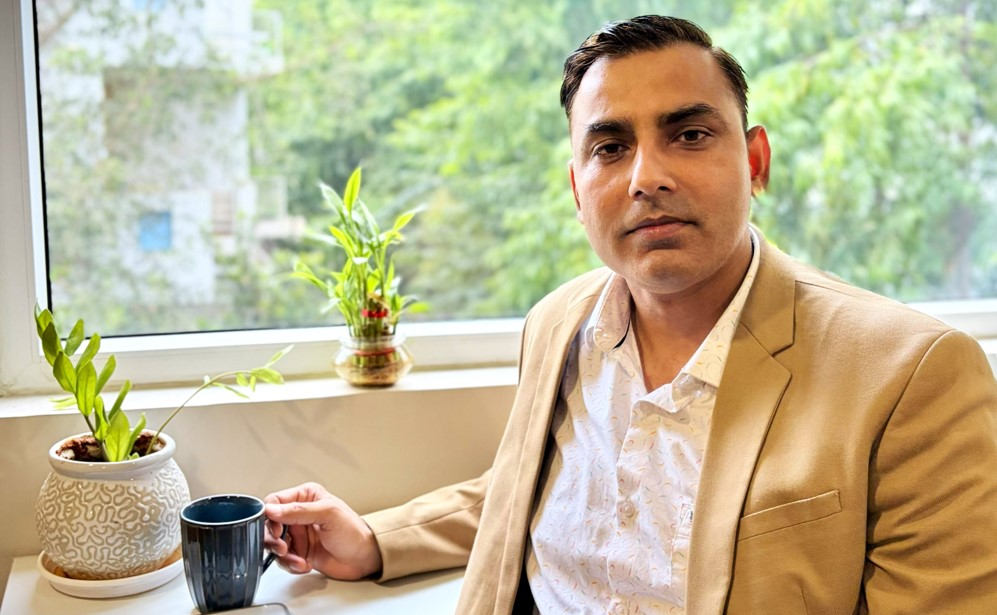
Watson's Cantina recently partnered with The Ōle Project for a research-led supper club centred on Malenadu. In this conversation with Jigar Ganatra, Managing Editor of Concierge India, Dushyant Mishra - Corporate General Manager, Shilton Hospitality, and The Ōle Project talk through what Watson's stands for, the thinking behind experiences like this, who The Ōle Project is, and where the partnership goes from.
Watson's Cantina is known for turning ideas into immersive experiences. How did food become part of that bigger concept?
It has always been food-led for us, because sharing a meal opens up conversation in a way a presentation just never quite manages. We wanted to talk about land, farmers, soil, biodiversity, the changing nature of our food systems — and honestly, people connect with subjects like that far more deeply over a meal than they would sitting through a lecture, especially if they've never engaged with a region like Malenadu before. Food becomes the entry point: a guest might come simply for an interesting dinner, but while they're enjoying it, they're also soaking in indigenous crops, seasonal ingredients, traditional farming practices and the story behind each dish, almost without realising it. Creativity helps make that journey engaging, but it's never the goal in itself — what we're really after is for someone to walk away thinking a little differently about the relationship between food, farming and culture. That philosophy is exactly what shaped how this particular partnership came together.
In today's time, a venue–chef collaboration is a balancing act. How does a partnership come together behind the scenes?
It was clear from the very first conversations that this was more than a venue partnership — everyone involved genuinely cared about celebrating Karnataka's regional food, and that shared intention made the whole collaboration feel natural rather than transactional. As a small, relatively new team, it was honestly humbling to work with chefs of such experience who still approached the cuisine with real curiosity — Chef Rohan in particular brought a childlike eagerness to understand the traditions behind each dish rather than reinvent them, suggesting refinements like added texture to certain preparations without ever compromising the recipes' authenticity. That same curiosity ran through the wider Cantina team too, from service staff to the people behind the scenes, all of whom kept asking thoughtful questions about ingredients and technique because they genuinely wanted to represent the cuisine with honesty and respect. By the end of the process, it felt less like we'd wrapped up a single event and more like we'd laid the foundation for a long-term partnership. That sense of a long-term partnership is really the bigger story here.
How do these experiences fit into the larger story Cantina is building?
Cantina is creating a platform for Karnataka's regional cuisines to be explored in thoughtful and creative ways, making room for the many micro-regional food cultures that make the state's culinary heritage so rich — and that's exactly where our work comes in. We focus on the research, documentation and storytelling behind these cuisines, while Cantina brings the reach, the hospitality and the ability to translate that research into a memorable dining experience for people who might never otherwise come across it. We see this as the beginning of something much larger than a single event — we hope Cantina becomes a place where people can regularly discover the diversity of Karnataka's food traditions, while giving researchers, chefs and communities working with regional cuisines a platform to share their stories with a much wider audience. That platform needed a starting point, and Malenadu was where it began.
Cantina is known for celebrating Karnataka's food broadly. What drew you to Malenadu specifically for this one?
The choice was intentional. Karnataka has enormous culinary diversity, but some regions have received far less attention than others, and we wanted to highlight a cuisine that remains largely underrepresented despite its richness. Beyond a handful of well-known dishes, very few people actually understand the real diversity of Malenadu's ingredients, farming practices and town-to-town variation, or the fact that it isn't a single uniform food culture at all but a mix of highlands, midlands and foothills, each shaping what's grown and cooked differently. This felt like the right opportunity to introduce guests not just to the food but to the landscape, produce and culture that shape it, and Cantina was the right partner to help us tell that story properly. Choosing the region was one thing — choosing the right partner to tell its story was another.
What drew Watson's to this partnership specifically, out of everyone you could have worked with?
Honestly, it came down to the passion and purpose behind the work. This wasn't simply about curating a menu — it was about preserving Karnataka's rich culinary heritage by documenting stories, traditions and recipes that have long existed outside mainstream conversation, often from communities and regions that rarely get written about at all. That kind of intent isn't something we come across very often, and it felt like exactly the sensibility we wanted behind an experience carrying the Watson's name. We felt Watson's Cantina was the right space to bring those stories to life and introduce our community to a side of regional cuisine that deserves far greater recognition than it currently gets. That decision has also changed how we think about Watson's itself.
How has this experience shaped the way you see Watson's as a space?
It's let us reimagine what a neighbourhood dining space can actually be. Watson's has always been about energy and familiarity — the kind of place people return to without needing a reason — but an experience like this shows that the same space can also hold something more considered: meaningful conversation, cultural exchange, and collaborations that connect people through food in a way a regular evening out doesn't always allow for. It doesn't change what Watson's is at its core, but it does expand what we think a neighbourhood dining space is capable of hosting, and this supper club is a good example of that. And judging by how guests responded, that instinct seems to have landed.
How has the response to the supper club shaped your thinking going forward?
It's been incredibly encouraging, and honestly, it reinforces something we believe strongly — today's diners are looking for more than just a great meal, they're seeking authenticity, storytelling and experiences they can truly connect with, and the demand we saw for this supper club made that very clear. People weren't just showing up for dinner; they were genuinely curious about the region, the ingredients and the stories behind the food, in a way we hadn't necessarily anticipated at this scale. We're delighted to have brought that vision to our guests, and it's given us real confidence to keep building on it rather than treating this as a one-off.